

How calligraphy pouch workshops make team building more creative
Most people have sat through at least one team building session they’d rather forget. The forced icebreakers. The trust fell that nobody wanted to do. The afternoon of “fun” that felt suspiciously like an extension of the work day, just with worse coffee. By the time everyone files back to their desks, the only thing that’s changed is the calendar.
The problem isn’t that teams don’t want to bond. It’s that a lot of activities ask people to perform connection instead of letting it happen naturally. You can’t manufacture rapport through a competitive quiz. But you can give people a shared task that’s low pressure, mildly challenging, and produces something real at the end. That’s where a calligraphy pouch workshop earns its place, and why more companies in Singapore are choosing this kind of hands-on session over the usual options.
Why the usual team building falls flat
The default corporate options tend to fall into two camps. There’s the high-energy, competitive stuff, like escape rooms and bowling, which is fun but often just rewards whoever is already loud and confident. Then there’s the structured “workshop” that’s really a meeting in disguise, full of flip charts and forced sharing.
Neither does much for creativity. Competition narrows focus, because the goal is to win, not to explore. And a meeting dressed as bonding rarely loosens anyone up. People stay in their work personas, careful and guarded, which is the opposite of the headspace you need for creative thinking.
A craft session breaks that pattern because there’s nothing to win and no right answer. You’re learning a skill with your hands, which quiets the part of your brain that’s busy managing how you come across. That shift is small, but it’s the whole point.
What actually happens in a calligraphy pouch workshop
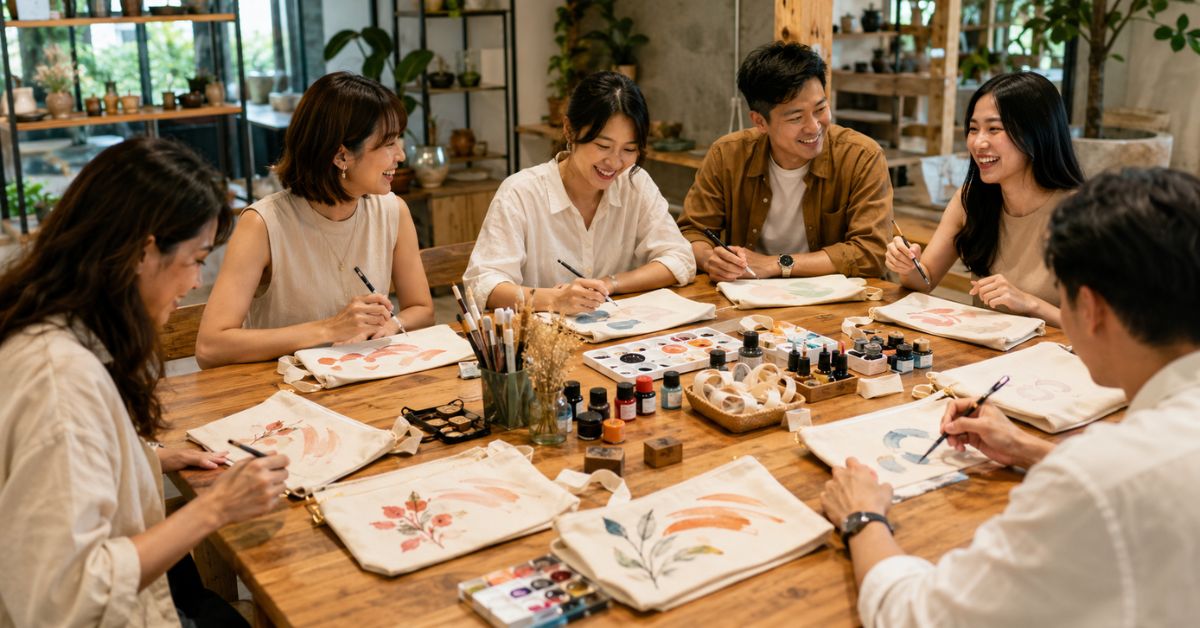
The format is simple, and that’s a strength. Participants learn the basics of modern calligraphy first, practising letterforms and brush control on paper. Then they apply what they’ve learned to a fabric pouch, designing and lettering something they get to keep and use.
So there are really two creative acts happening. One is the calligraphy itself, where you’re figuring out spacing, pressure, and rhythm. The other is the design decision: what to write, how to lay it out, which colours to use. Someone might letter their own name, an inside joke from the team, or a phrase that means something to them. The pouch becomes a small personal object rather than a generic corporate freebie.
CraftLabs runs these sessions across Singapore with a facilitator guiding the group, which matters more than it sounds. A good instructor takes the pressure off by making it clear that wobbly first attempts are normal and expected. That permission to be bad at something is rare in a work setting, and it’s exactly what makes the creativity flow.
Where the creativity comes in
Calligraphy works as a creative team activity for reasons that aren’t obvious until you’ve done it.
- It’s a level playing field. Almost nobody walks in already good at calligraphy. The senior manager and the new intern start from the same place, which dissolves the usual hierarchy for an hour or two. People talk to each other differently when they’re all beginners.
- Constraints spark ideas. You’ve got one pouch, a set of colours, and a limited space to work with. Tight limits tend to produce better creative thinking than a blank cheque, because the brain gets to work solving a real problem instead of freezing at infinite choice.
- Mistakes are visible and shared. When someone smudges a letter and laughs about it, everyone relaxes. Shared imperfection builds trust faster than any structured exercise, and it signals that this is a space where experimenting is fine.
- The output is personal. Because each pouch reflects the person who made it, people end up sharing a little about themselves through their choices. You learn that the quiet analyst loves bold colour, or that someone has gorgeous handwriting nobody knew about.
These are the same conditions that help creative work happen back at the office. Psychological safety, useful constraints, and permission to fail are what let teams take risks on ideas. A workshop just gives people a safe, low stakes place to practise that muscle.
How it carries back into the workplace
A good team activity shouldn’t end when the session does. The reason calligraphy pouches tend to stick is the object itself. People carry the pouch around, use it at their desk, spot a colleague using theirs. It’s a small ongoing reminder of a shared afternoon, which is more than you can say for a laser tag score nobody remembers by Friday.
There’s also a quieter benefit for how teams think. Slowing down to focus on something detailed and physical is a reset for people who spend their days context switching between Slack, email, and back to back calls. That kind of focused attention is increasingly hard to come by, and practising it together, even briefly, can change the tempo of how a team works.
Consider a marketing team that’s been stuck in the same brainstorming rut. Put them in a room where the task is lettering a pouch, and the dynamic shifts. The people who usually dominate the meeting have to slow down. The ones who usually stay quiet have something to show. By the time they’re back at the whiteboard the following week, the conversation often feels a bit less rigid, because they’ve seen a different side of each other.

Choosing the right session for your team

Not every craft workshop suits every group, so it helps to think about your team before booking.
- Group size. Calligraphy works well for small to mid sized teams where the facilitator can actually give attention to everyone. Very large groups may need to split into rounds.
- Time and setting. A pouch workshop usually runs comfortably within a couple of hours, which fits a half day offsite or an extended lunch session without eating the whole calendar.
- The mix of people. If your team includes folks who clam up in performance based activities, a calm craft session is far kinder to them than anything competitive.
- What you want afterwards. If the goal is a usable keepsake plus a genuinely relaxed mood, a pouch ticks both. If you only want adrenaline, this isn’t it, and that’s fine.
The honest answer is that a calligraphy workshop isn’t the loudest or flashiest option on the list. It’s the one people quietly enjoy more than they expected to.
Final thoughts
Creative team building isn’t about cramming more activity into the day. It’s about creating the conditions where people feel safe enough to drop their work armour and actually engage. A calligraphy pouch workshop does that by handing everyone a beginner’s brush, a bit of fabric, and the freedom to make something imperfect and personal.
The pouch is the souvenir, but the real takeaway is subtler: a team that’s learned, even for an afternoon, that they can fumble through something new side by side. That’s the foundation creative work is built on and it tends to outlast the session by a long way. As more Singapore companies look past the standard offsite playbook, expect the quiet, hands on options to keep gaining ground, because they do the one thing the flashy ones often miss. They let people just be people for a while.
FAQs
Do participants need any prior experience with calligraphy?
No. These workshops are built for complete beginners, and the facilitator covers the basics from scratch. Most people produce something they’re happy with on their first try.
How long does a calligraphy pouch workshop usually take?
Most sessions run around one and a half to two hours, which fits neatly into a half day offsite or an afternoon block without disrupting the rest of the schedule.
What group sizes work best?
Small to mid sized teams tend to get the most out of it, since the facilitator can give everyone proper attention. Larger groups can still join by running in batches.
Do participants get to keep what they make?
Yes. Each person designs and letters their own pouch and takes it home. It’s a usable item rather than a throwaway craft, which is part of why the experience tends to stick.
Is this suitable for teams that aren’t artistic?
Especially those teams. Calligraphy rewards patience more than talent and because everyone starts as a beginner, people who don’t see themselves as creative often surprise themselves the most.
