

Resin Art Workshops: Make Glossy Pieces You’ll Love to Display
A lot of people want to be creative, but they stop before they start. They worry they are not artistic enough do not know what materials to buy or fear the final piece will look messy rather than display worthy. Resin art workshops solve that problem by giving beginners a structured, hands on way to create something polished, personal and usable.
In Singapore this matters more than it may seem. Arts engagement is strong: based on the 2023 Population Survey on the Arts, nearly six in ten people attended arts events in person, while close to seven in ten engaged with arts through digital or online channels. Yet common barriers still include family commitments, unfamiliarity with artists or activities and not having someone to go with. That is where guided, social workshops stand out: they make creative participation easier, less intimidating and more meaningful.
Why Resin Art Has Become a Favourite Hands-On Workshop
Resin art is satisfying because it gives participants a rare mix of control and surprise. You choose your colours, pigments, flowers, shimmer or decorative details, but the resin’s movement creates organic patterns that cannot be copied exactly. The result is a glossy piece that feels professionally finished even when made by a first-timer.
CraftLabs’ resin art workshop in Singapore is designed around that beginner-friendly experience. Participants are introduced to how resin works, how to combine colours and how different pouring techniques create marbling effects. The workshop is positioned for beginners, enthusiasts, team building groups, private events, birthday parties, hens parties, families and schools.
The Display Value: Why Resin Pieces Feel Different
Unlike a sketchbook exercise that might be tucked away, resin art usually becomes an object you can use or display. A coaster can sit on your desk a pendant can be worn, a tray can hold jewellery and a resin lamp can become part of your room décor. That physical usefulness gives the workshop a stronger emotional payoff: you are not just trying art you are making something that continues to live in your space.
What You Can Make in a Resin Art Workshop
One reason resin art appeals to different age groups and occasions is the range of possible projects. CraftLabs lists several resin workshop formats, including marbled acrylic pour coasters, pressed flower resin coasters, resin pendants and jewellery, wooden tray resin pours, and resin lamps.
Marbled Coasters for First-Time Makers
Coasters are a practical starting point because they are compact, quick to design and forgiving. A beginner can explore colour blending without needing to manage a large surface. For example a participant might pair navy, white and gold shimmer for a hotel-lounge look or pastel pink with translucent resin for a softer desk accessory.
Pressed Flower Coasters for Sentimental Pieces
Pressed flower resin pieces work well for gifts, bridal events, Mother’s Day activities, or keepsakes. The design process encourages people to think about placement, spacing, and balance. A few small blooms can feel elegant when suspended in clear resin, especially when the rest of the piece is kept minimal.
Resin Jewellery for Personal Style
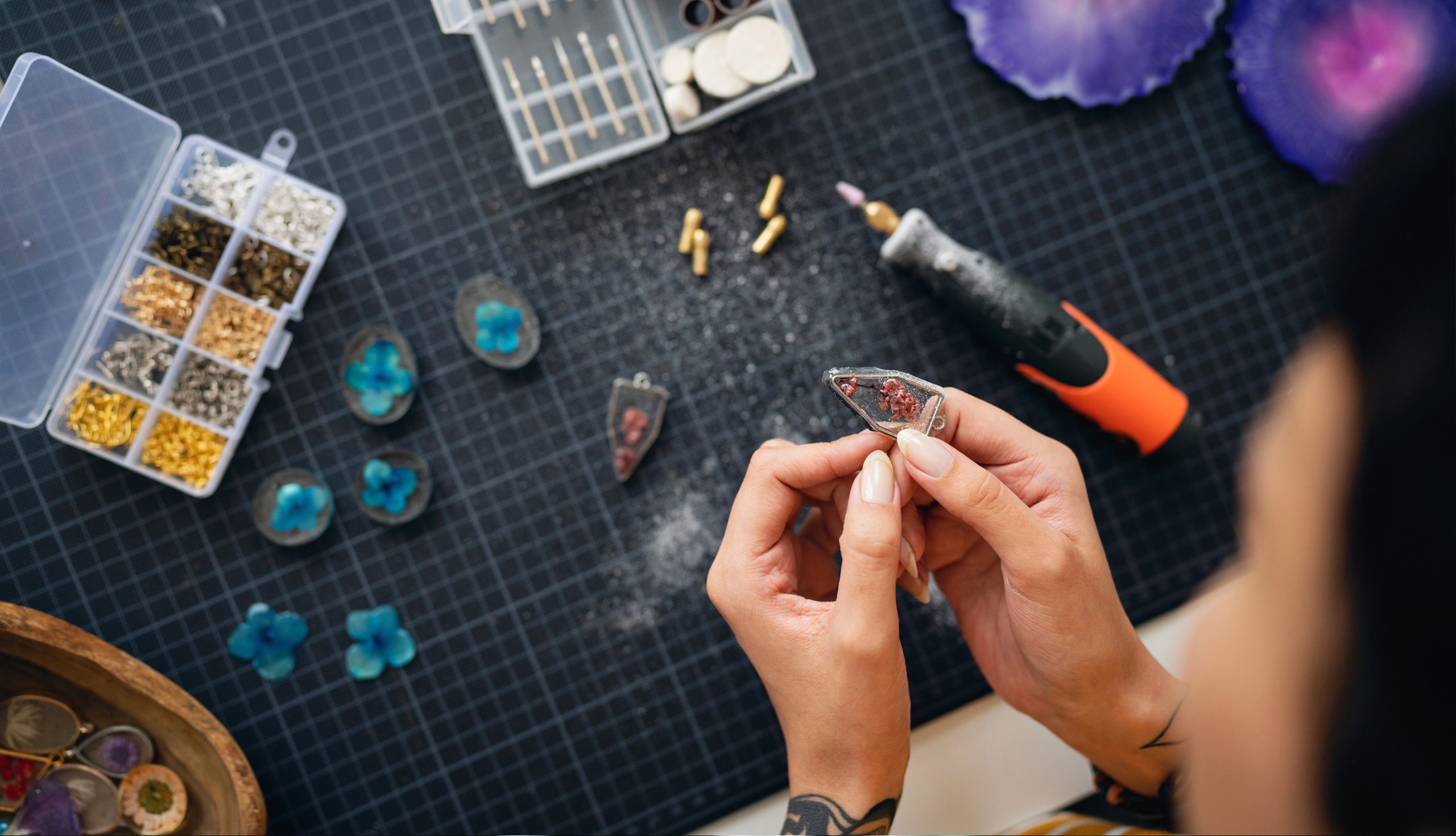
Pendant and jewellery workshops appeal to people who want wearable art. The scale is smaller so details matter a single metallic fleck, colour gradient or tiny floral element can completely change the look. These pieces are ideal for participants who enjoy fashion, accessories or personalised gifts.
Wooden Tray and Resin Lamp Projects for Home Décor
A wooden tray resin pour is more functional and interior-focused. It suits participants who want a statement piece for a coffee table, entryway or vanity area. Resin lamps take the display value further because the material interacts with light, giving the final piece a different mood in the evening.
Why Instructor-Led Resin Workshops Are Better Than DIY Guesswork
Resin looks simple on social media, but the material has rules. Mixing ratios, curing time, surface preparation, pigment quantity and pouring technique all affect the final result. Too much pigment can interfere with curing. Poor mixing can leave sticky patches. A rushed pour can trap bubbles or muddy the colours.
A workshop reduces those risks because participants get step-by-step guidance. At CraftLabs, trainers guide participants from start to finish, introduce the material and its properties, and help them work toward the best possible outlook for their resin products. The studio workshop duration is listed as 1.5 hours with professional trainers assigned to support participants.
Safety Matters When Working With Resin
A good resin workshop should feel fun, but safety should never be treated as an afterthought. Epoxy resins can cause skin irritation or sensitisation if handled poorly and safety guidance recommends following labels and Safety Data Sheets, reducing exposure and using appropriate protective equipment such as gloves or goggles.

How Resin Art Supports Creativity, Stress Relief, and Team Bonding
A resin art workshop is not only about the object at the end. The process itself has value. In a Drexel University study, 39 adults took part in 45 minutes of art-making, and 75% of participants showed lowered cortisol levels afterward, with no link between prior art experience and stress reduction.
That finding matches what many workshop participants experience in real life. Resin art asks you to slow down, look closely at colour movement, and make small creative decisions without needing to perform. For a busy professional, student, or parent, that can feel refreshing.
For companies, the benefits are different but just as useful. Resin art creates a low-pressure environment where people can talk naturally while doing something with their hands. Unlike competitive team-building games, everyone leaves with a personal result. CraftLabs also notes that resin workshops can include team-building elements and be customised for customer needs.
Practical Tips for Creating Resin Pieces You’ll Actually Want to Display
A beautiful resin piece usually comes from restraint, not from adding everything available on the table. Before the session starts, think about where your finished item might go: your office desk, bedside table, dining area or gift box.
Useful design choices include:
- Choose two main colours and one accent instead of mixing too many shades.
- Use metallic pigments sparingly so they highlight the design rather than overpower it.
- Leave some clear or lighter areas to create depth.
- Match the project to its purpose: bold colours for display pieces, softer tones for everyday home décor.
- For pressed flowers, place larger elements first, then fill gaps with smaller details.
Choosing the Right Workshop for Your Occasion
The best resin project depends on who is attending and what they want to take away.
For Couples and Friends
Coasters, pendants and small trays are easy to compare, photograph and gift. They work well for weekend activities, celebrations, or casual bonding sessions.
For Families With Children
Beginner-friendly resin formats are more suitable because younger participants may need help with pouring and design decisions. CraftLabs notes that kids are welcome, with parental supervision recommended for younger participants aged 3–7.
For Corporate Teams
Choose projects with enough creative freedom but simple instructions. Coasters and trays work well because every participant can personalise the piece while following the same process. CraftLabs lists a recommended group size from five participants to unlimited, with its studio able to hold up to 50 people and a location five minutes from Marymount MRT.
Conclusion
Resin art workshops are popular because they remove the biggest barriers to making art: uncertainty, lack of materials, fear of mistakes and not knowing where to begin. With guided instruction, participants can safely explore colour, texture, and pouring techniques while creating a glossy object that feels personal and display-worthy.
In Singapore, where people are actively engaging with arts but still face practical barriers like time, unfamiliarity and lack of companions, resin workshops offer a simple bridge between interest and action. The future of creative workshops will likely favour experiences that are social, beginner-friendly, customisable and useful beyond the session itself. Resin art fits that direction perfectly: it gives people a moment of calm a shared experience and a finished piece they will actually want to keep.
FAQs
Do I need art experience to join a resin art workshop?
No. Resin art workshops are beginner-friendly, and instructors guide participants through the process.
What can I make in a resin art workshop?
Common options include resin coasters, pressed flower coasters, pendants, jewellery, wooden trays and resin lamps.
Is resin art suitable for corporate team building?
Yes. It works well for team bonding because it is hands-on, relaxed and allows every participant to create a personalised item.
Do I need to bring my own materials?
Usually no. CraftLabs states that materials, moulds and tools are provided for its coaster-making sessions.
How should I care for my finished resin piece?
Keep it away from excessive heat, harsh cleaning chemicals and prolonged direct sunlight. Wipe gently with a soft cloth to preserve the glossy finish.
